Aug. 04, 2026
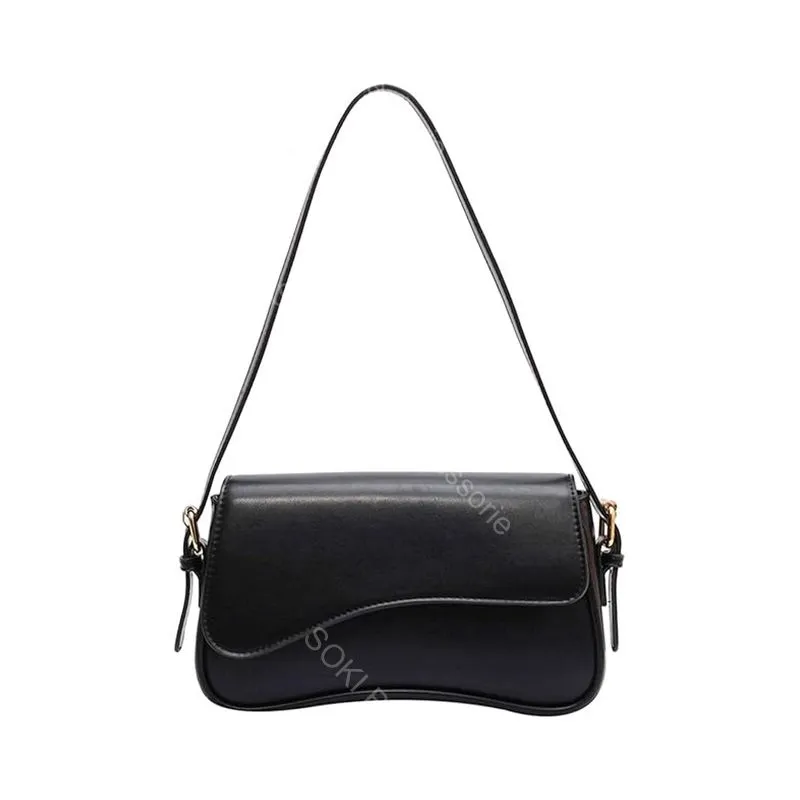
If you are looking for a practical, production-ready way to extend the service life of canvas bags while verifying real-world performance, I recommend following a structured care-and-testing workflow that combines fiber-level maintenance, seam-strength verification, abrasion resistance evaluation, and controlled inspection checkpoints. At SUKI, our approach to canvas bags with custom logo factory projects is simple: we protect the fabric, validate the construction, and document every critical quality point with measurable data. Whether you are a beginner managing your first promotional tote order or an experienced buyer auditing bulk production, this guide will help you understand how to clean, store, test, and evaluate canvas bags with confidence, using proven methods aligned with industry standards such as ASTM, DIN, and internal 100% inspection protocols.
Canvas bags are often chosen for retail packaging, promotional campaigns, corporate gifting, and daily carry use because they combine sustainability, load-bearing capacity, and a premium tactile feel. Yet even a heavy-duty canvas tote can fail early if the fabric is not cared for correctly or if the stitching, handles, and printing are not validated before shipment.
In our production experience at SUKI, the most common failure modes include:
That is why Canvas Bags with Custom Logo Factory projects should never stop at visual inspection. A reliable supply chain requires a complete system of maintenance guidance, lab testing, and final release criteria. When we follow that system, we reduce returns, improve customer satisfaction, and protect brand image.
Before you wash or test a canvas bag, we first identify the base construction. This step determines the correct care method and the correct test protocol.
Typical canvas bag variables include:
Fabric composition
Fabric weight
Finish type
Decoration method
This identification stage matters because a cotton canvas bag will behave differently from a coated tote under washing, flexing, and abrasion testing. At Canvas Bags with Custom Logo Factory facilities, we record this data on the production sheet before moving to the next stage.
Once the material is identified, proper care becomes straightforward. I usually recommend the following sequence for both end users and procurement teams.
Use a soft brush or lint roller to remove particulate matter before washing. This prevents abrasive grit from embedding deeper into the weave during laundering.
Practical tips:
Treat stains locally with mild detergent and cold water. For oil-based spots, a neutral pH cleaner is safer than harsh solvents.
What to avoid:
For branded products from Canvas Bags with Custom Logo Factory, spot cleaning is especially important because decoration integrity directly affects the perceived value of the item.
For most canvas bags, we recommend cold or lukewarm water, typically below 30°C, with mild detergent. Hand washing is preferred for premium printed or embroidered bags.
If machine washing is necessary:
A practical benchmark we use is to monitor dimensional stability after wash cycles and maintain tolerance within ±3% for standard promotional totes, depending on the specification.
Air-drying is the safest method. High heat can distort the weave, accelerate shrinkage, and weaken printed graphics.
Best practices:
Moisture is one of the biggest threats to canvas longevity. Bags should be stored:
At SUKI, we advise clients using Canvas Bags with Custom Logo Factory services to include storage instructions on the product hangtag or care label.
Once care procedures are established, the next step is durability validation. This is where many buyers gain real value, because a bag may look fine on the shelf but still fail after repeated loading or abrasion.
For Canvas Bags with Custom Logo Factory orders, we typically evaluate the following performance points:
Incoming fabric inspection
Cutting and sewing audit
Functional performance test
Aging and abrasion test
Final release inspection
To ensure your quality claims are defensible, it is important to reference formal methods. Depending on the bag structure and market requirements, we may align testing with standards such as:
| Test Item | Common Standard Reference | Purpose |
|---|---|---|
| Tensile strength | ASTM D5034 | Measures fabric breaking force |
| Tear resistance | ASTM D2261 / DIN methods | Evaluates propagation resistance |
| Seam strength | ASTM D1683 | Checks seam failure resistance |
| Color fastness to rubbing | ISO / AATCC equivalents | Assesses color transfer |
| Abrasion resistance | Martindale-type / DIN EN references | Measures wear durability |
| Dimensional stability | Internal wash protocol based on ASTM principles | Checks shrinkage after laundering |
Using these standards in a Canvas Bags with Custom Logo Factory process makes your quality control more transparent and easier to communicate to overseas buyers.
We once worked with a European retail client who ordered 20,000 promotional totes for a seasonal campaign. The initial sample looked excellent, but our lab pre-check found that the handle stitch density was below the target specification on two sample lots. Instead of shipping a risky batch, we adjusted the bartack reinforcement and retested the bags.
After correction:
This is exactly why Canvas Bags with Custom Logo Factory testing should be integrated before mass shipment. A small adjustment at the validation stage can prevent a costly recall later.
To make the process more efficient, I recommend keeping the following tools available:
For buyers managing private-label or promotional orders, Canvas Bags with Custom Logo Factory support should also include:
These resources improve communication and reduce misunderstandings during procurement.
Even with a strong plan, some issues still appear during care or testing. Here is how we typically handle them.
This usually indicates insufficient curing or incompatible ink. The solution is to verify curing temperature, wash adhesion, and flex resistance before production approval.
If the tote stretches excessively, we check webbing density, bartack placement, and reinforcement patches. For premium orders, we may upgrade the stitch pattern or fabric weight.
This can result from untreated cotton or improper drying. Pre-shrinking the fabric and providing clear care instructions reduces this risk.
We solve this by selecting higher-twist yarns, improving finishing, or modifying the coating system.
This is often related to low dye fixation or poor rubbing fastness. Lab testing before bulk production is the best preventive action.
When these issues are addressed early, Canvas Bags with Custom Logo Factory projects remain stable, predictable, and cost-effective.
A good canvas bag should meet both functional and visual expectations. When I assess a bag, I look at the following final criteria:
For bulk orders, our standard operating model at SUKI includes inline inspection, final audit, and packaging verification. This layered control system is what makes Canvas Bags with Custom Logo Factory results more dependable than a single visual check.
If you are sourcing from a supplier, ask these questions before confirming the PO:
These questions help you separate marketing claims from actual process capability.
At SUKI, we support buyers who need more than simple bag manufacturing. We provide a controlled process that combines customization, compliance, and durability verification. For brands seeking Canvas Bags with Custom Logo Factory services, this means:
We do not treat care guidance and durability testing as optional extras. We treat them as core quality deliverables.
If you want canvas bags to last longer and perform better, the process should always follow the same logic: identify the material, clean it correctly, test it under recognized standards, inspect critical points, and correct defects before shipment. That approach protects the bag, the logo, and the brand behind it. With Canvas Bags with Custom Logo Factory support from SUKI, you can achieve better durability, lower complaint rates, and stronger market trust.
For practical results, remember these essentials:
When these steps are followed consistently, Canvas Bags with Custom Logo Factory projects become far more reliable, and Canvas Bags with Custom Logo Factory quality becomes easy to prove rather than simply promise. For brands that care about long-term performance, Canvas Bags with Custom Logo Factory is not just a production model—it is a quality strategy.
If you are ready to build a better product line, SUKI can help you move from sample approval to bulk delivery with confidence, precision, and measurable durability.
A: We utilize various fabrics including 100% cotton, poly-cotton, recycled canvas, and coated options. Each fabric behaves differently under washing and testing, which is crucial for durability and performance.
A: We implement rigorous testing protocols that include wash and abrasion resistance assessments to ensure that printed logos maintain integrity and do not crack during use.
A: Our quality assurance involves inline inspections, final audits, and a 100% inspection for critical defects, ensuring that all bags meet established standards before shipment.
A: Absolutely. We recommend a structured cleaning routine that includes removing dust, spot cleaning stains, washing gently, and storing bags in a dry, ventilated space to prevent moisture damage.
A: We carry out a comprehensive testing workflow including tensile strength, seam strength, handle attachment integrity, and abrasion resistance tests, ensuring that each bag meets recognized standards.
Related News

Navigation
Navigation
Products
Products
Contact Us
Contact Us
E-mail: soki@sokibag.com
E-mail: Jean@chinasuki.com
WeChat: xiong8555
Mobile: +86 135 8867 7739
Mobile: 0095 099 7951 9999
Tel.: (Cambodia) +855 025 210 212
Add.: Prey Pdao Village,Trapeang Kong Commune, Samrong Tong District, Kampong SpeuProvince, Kingdom of Cambodia
Add.: East Dagon Industrial zone, NO.(55/3 ) Daw phwar shin street, east dagon myothit township, Yangon Region, Myanmar
Add.: 2F East, Building A, No. 53 West Jinshi Avenue, Shiling Town, Huadu District, Guangzhou, Guangdong, China
Add.: Building 2, 490 Chengdian Road, Yiwu City, Zhejiang Province, China


